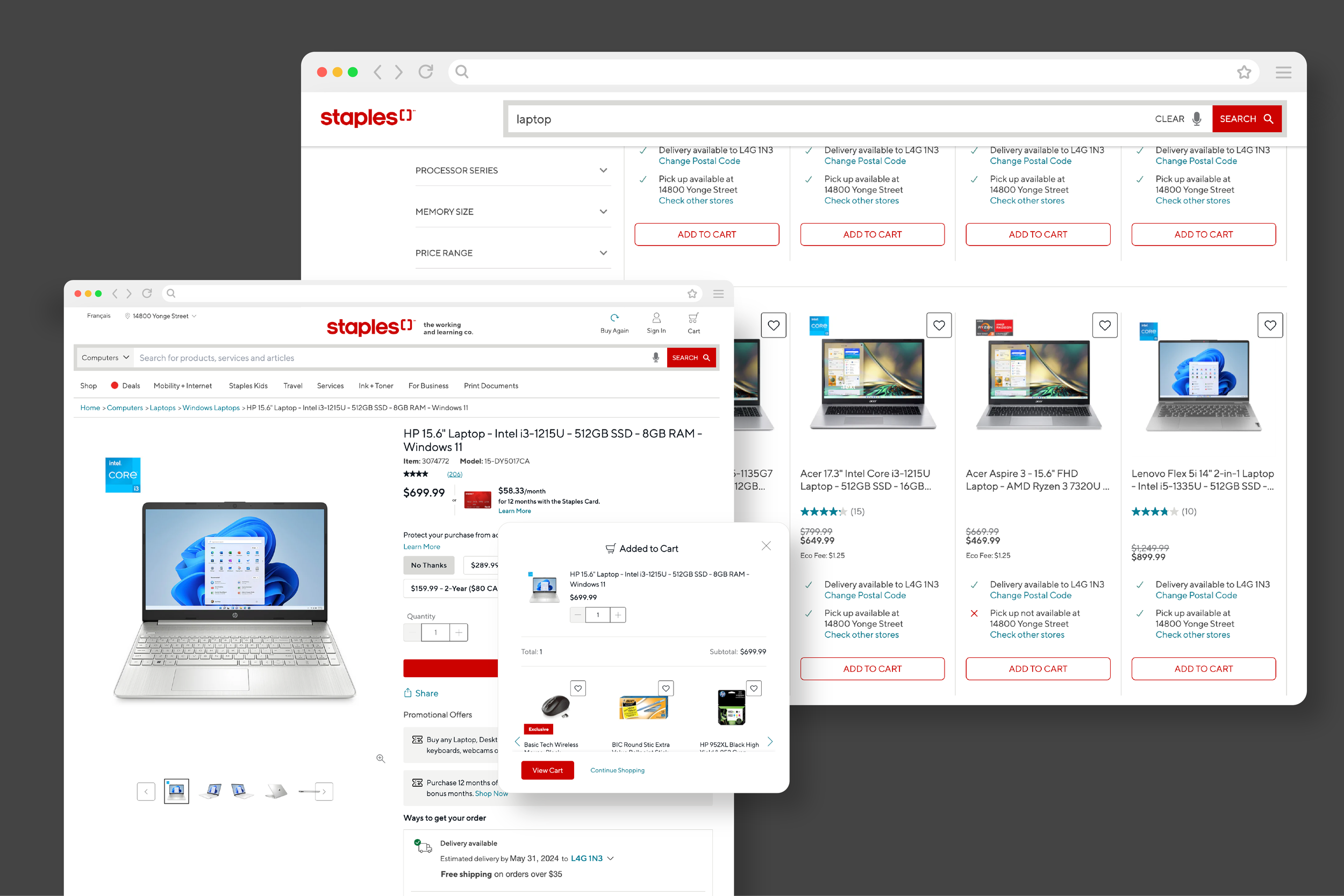
Staples Product Availability
Customers find out a product is unavailable too late in their shopping journey due to the use of inaccurate data and over-simplified fulfillment rules. Once accurate data is acquired during checkout, customers are forced to rework their entire shopping cart which leads to a frustrating user experience.
My Role
Manager of Product Design
Main Goal
Solve for the pain points of our users when it comes to product availability and the Out of Stock experience on staples.ca.
Understanding the User
A topic of conversation that kept surfacing in our Chatter feedback was the mention of product availability and out of stock. Customers were furious citing inventory issues as the source of their negative experience throughout the various stages of their shopping journey; from awareness, to consideration, all the way through to conversion. Upon closer look, we discovered that the issue made up approximately 72% of all negative mentions (if not more) within the span of a year. We had sampled data from 2021 to 2022, which followed the launch of a new product feature that introduced product availability on the product listing page (PLP).
It appeared that our “quick fix” did just the opposite of what the product team had intended, leaving us with more questions than answers.
What our customers were saying
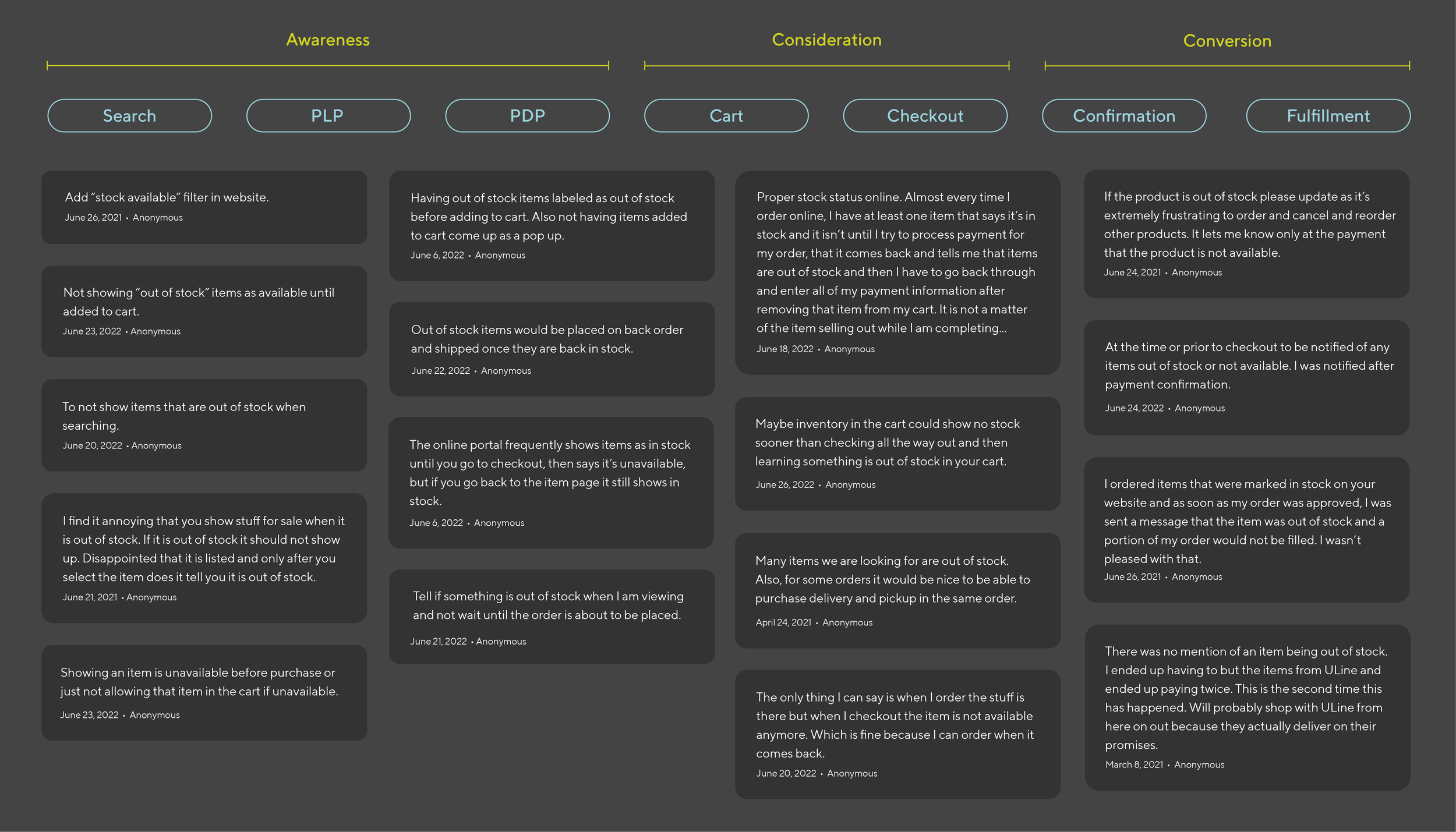
Comments on Chatter from 2021 to 2022
Tip of the iceberg
Working at a company with a relatively low UX maturity, we had always resorted to quick fixes. Product managers would determine the direction of our products and services based on assumptions and little UX research. Band-aid solution after band-aid solution, we accumulated a lot of technical debt. We soon realized that the inventory issues were a bi-product of different but related problems.
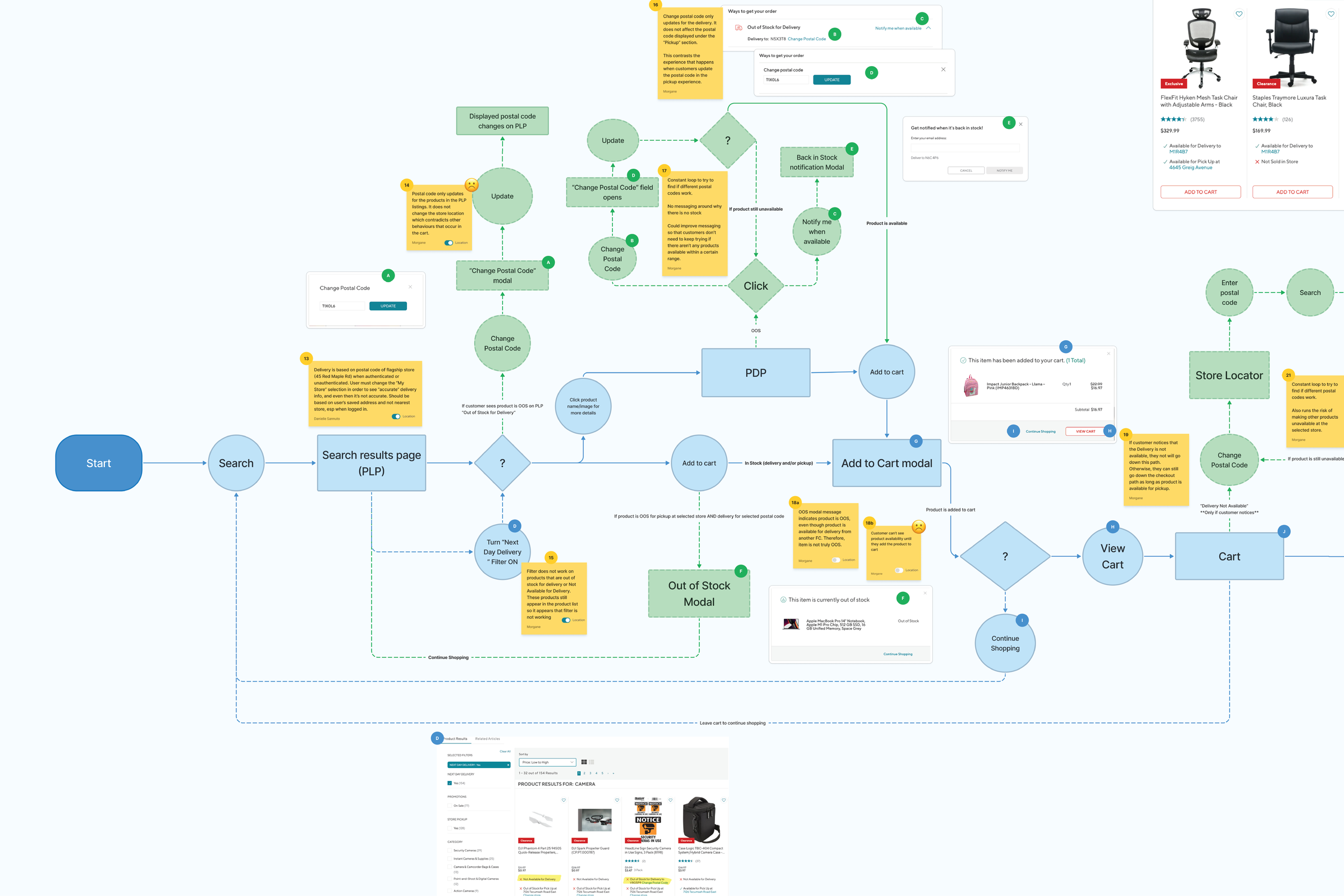
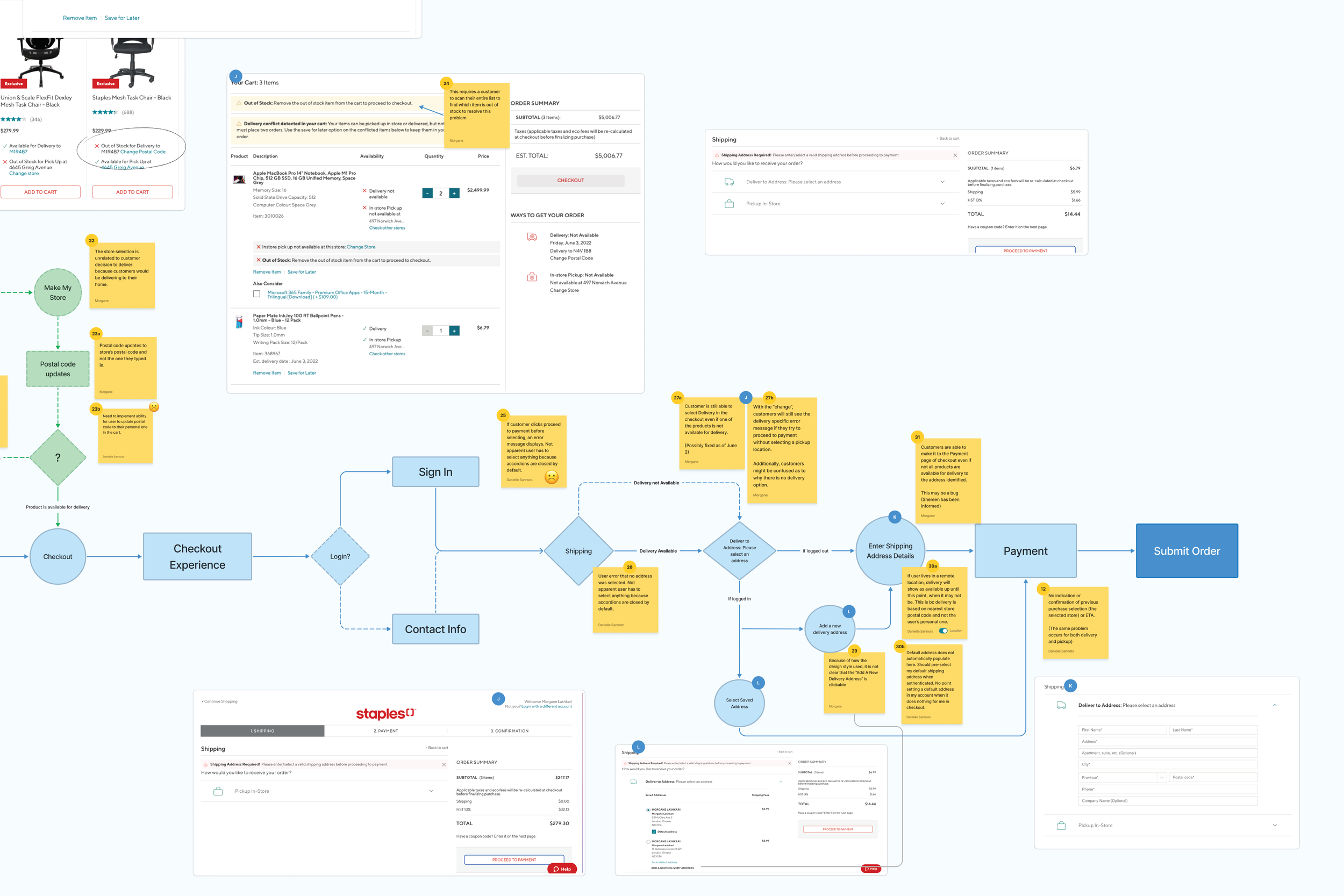
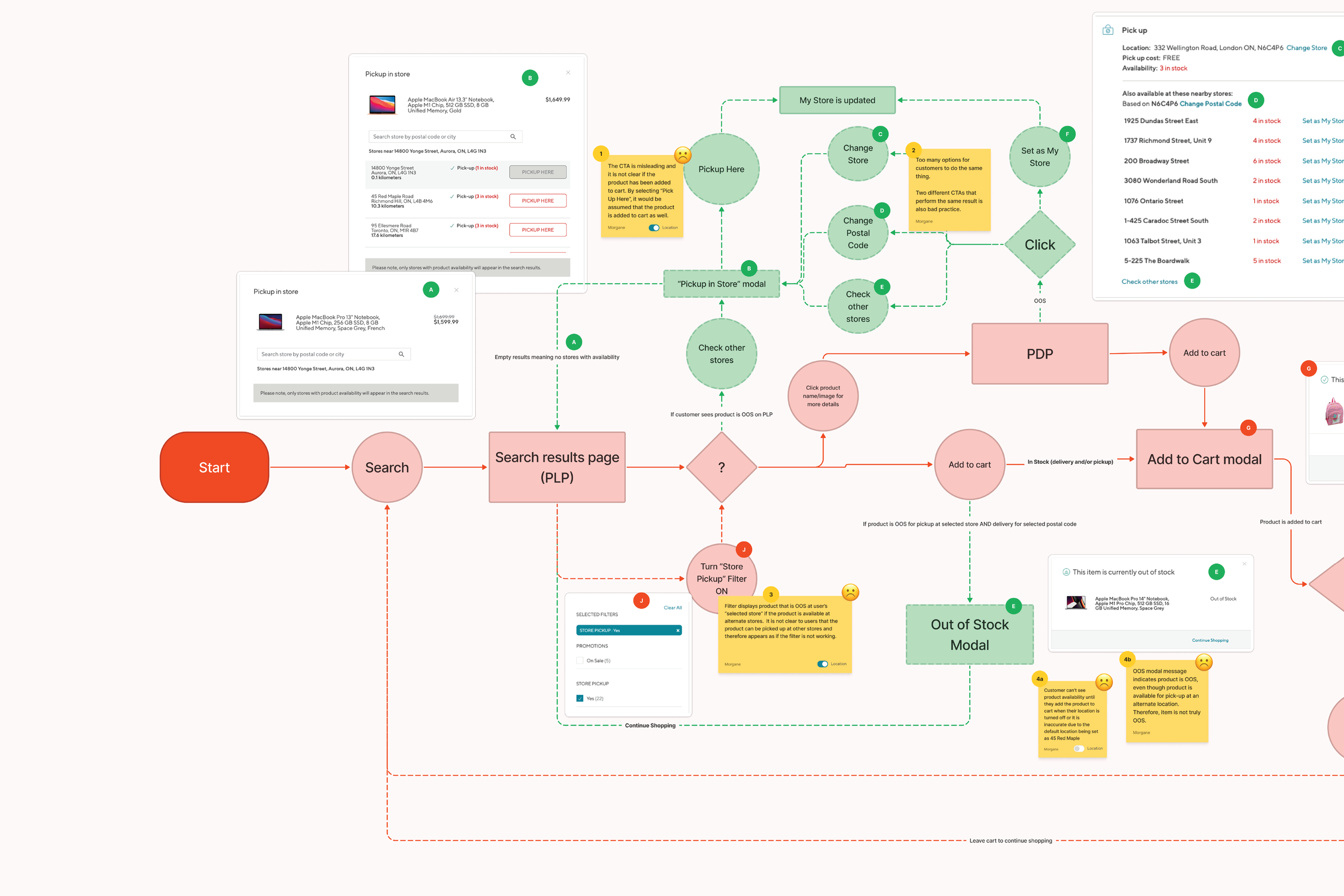
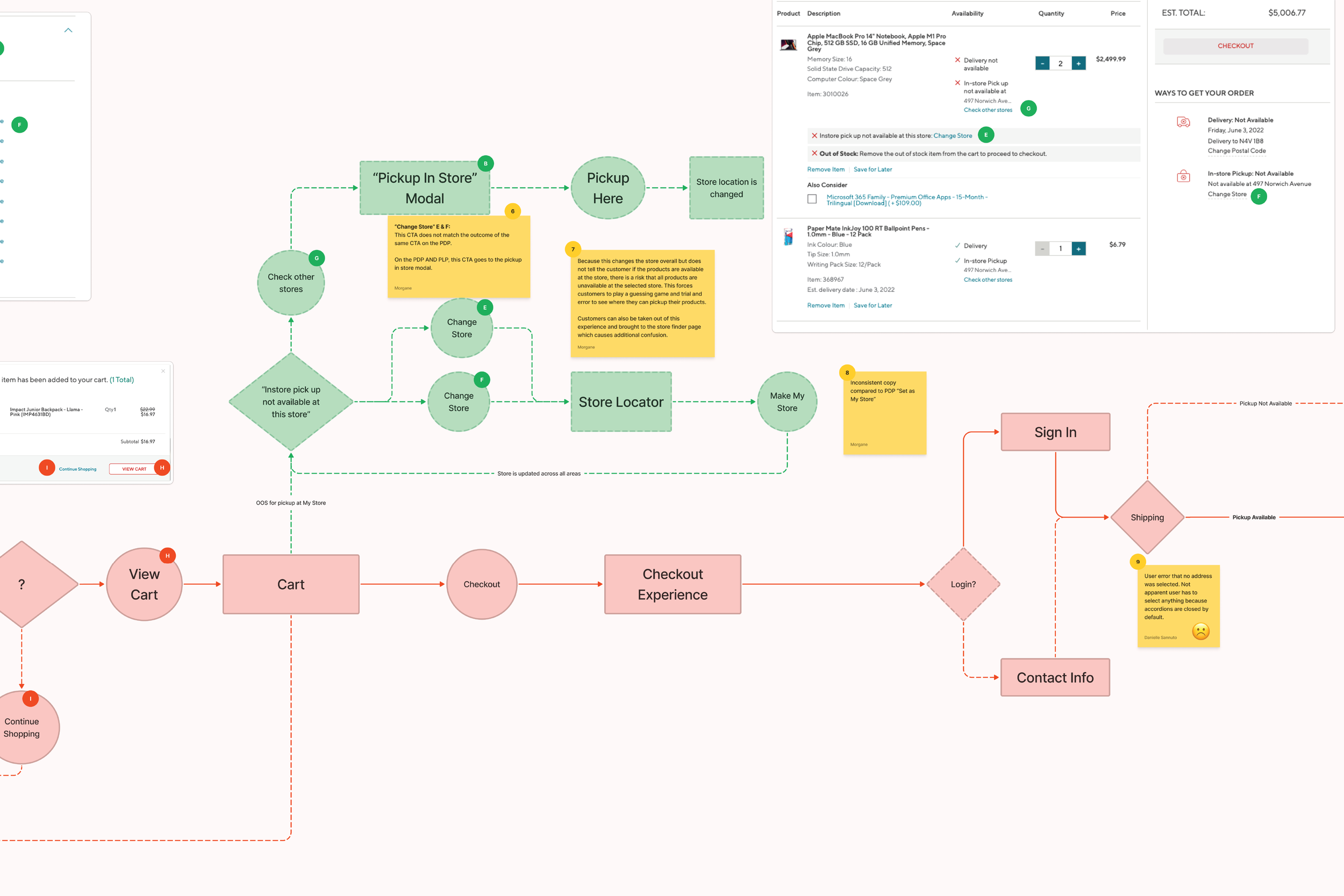
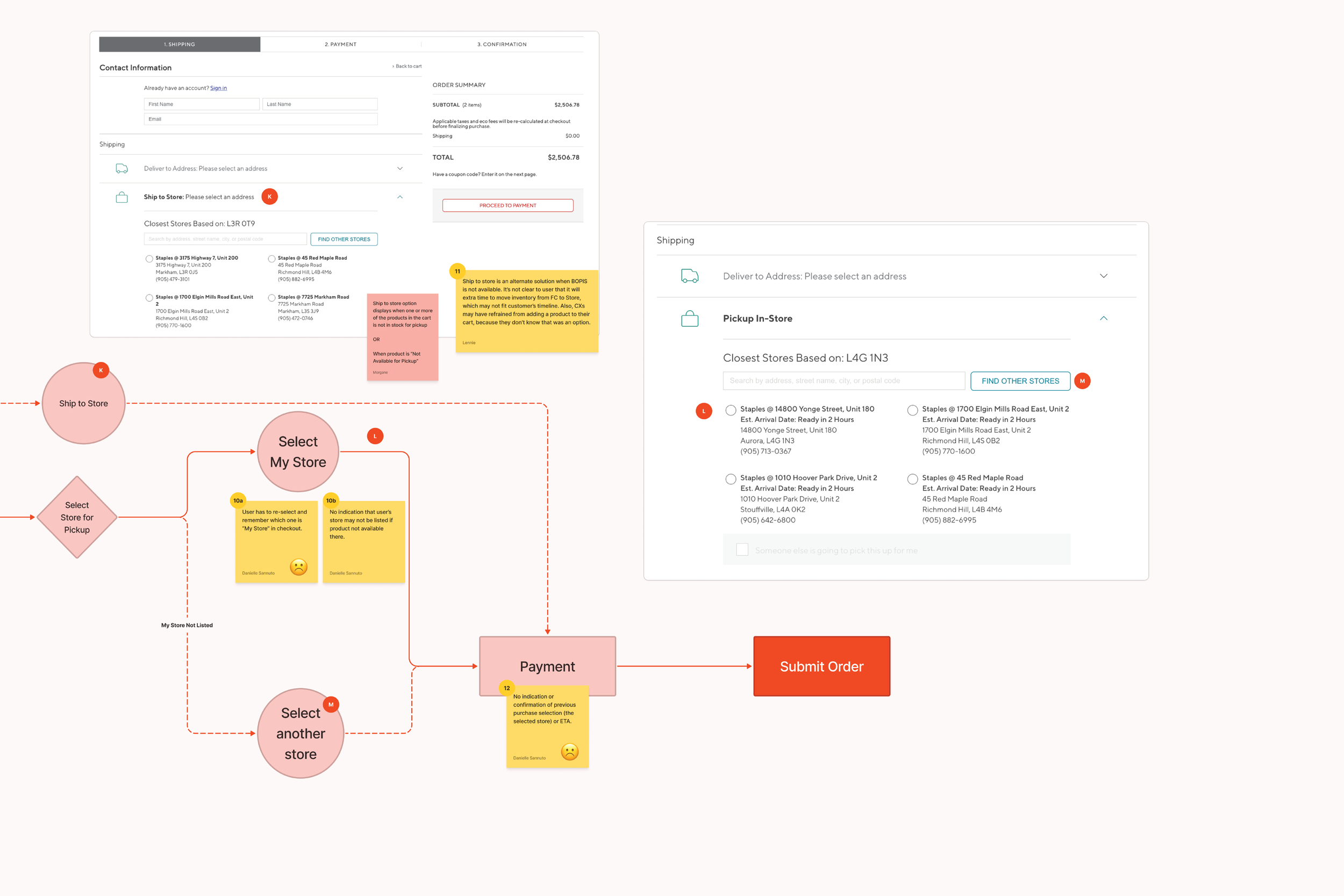
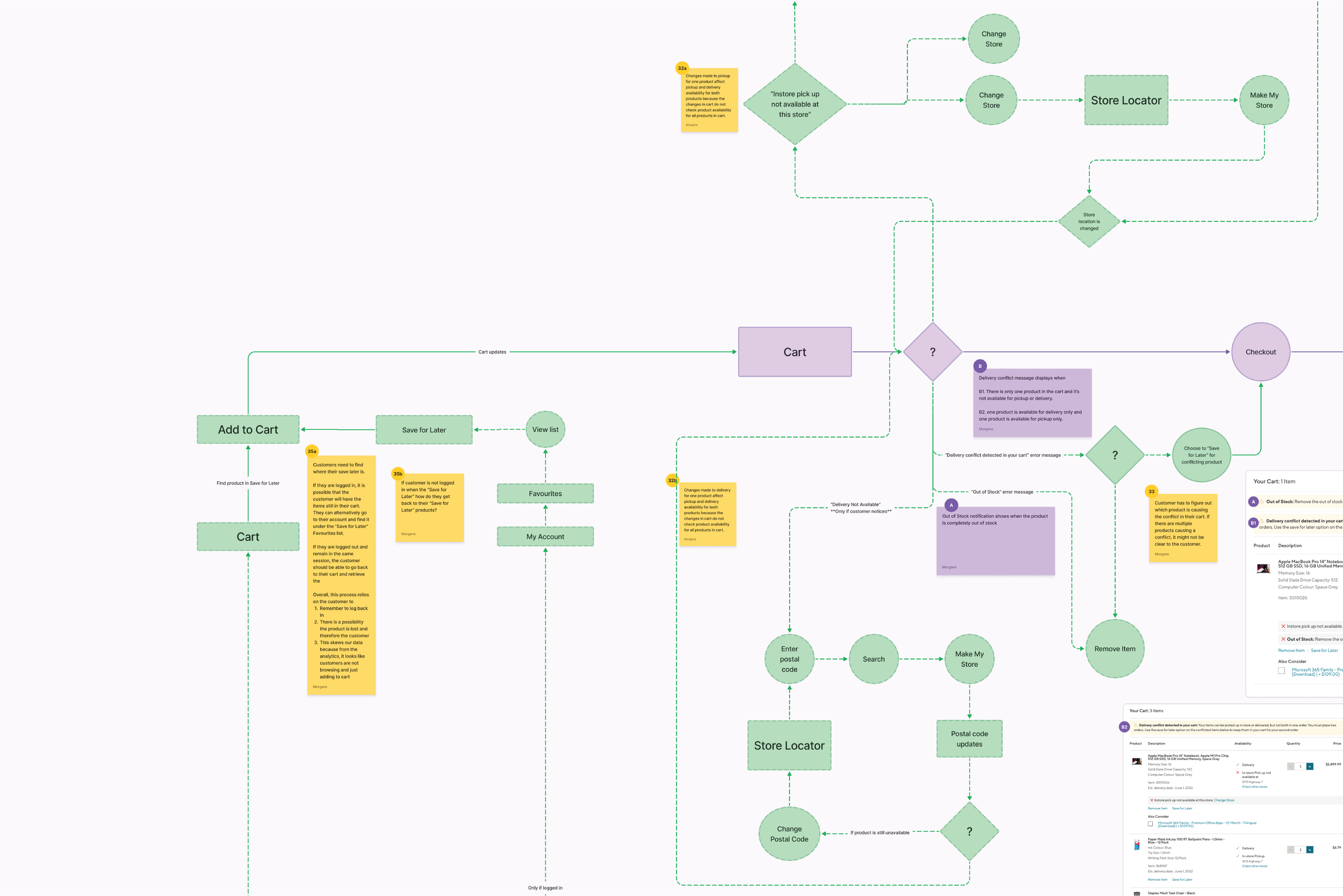
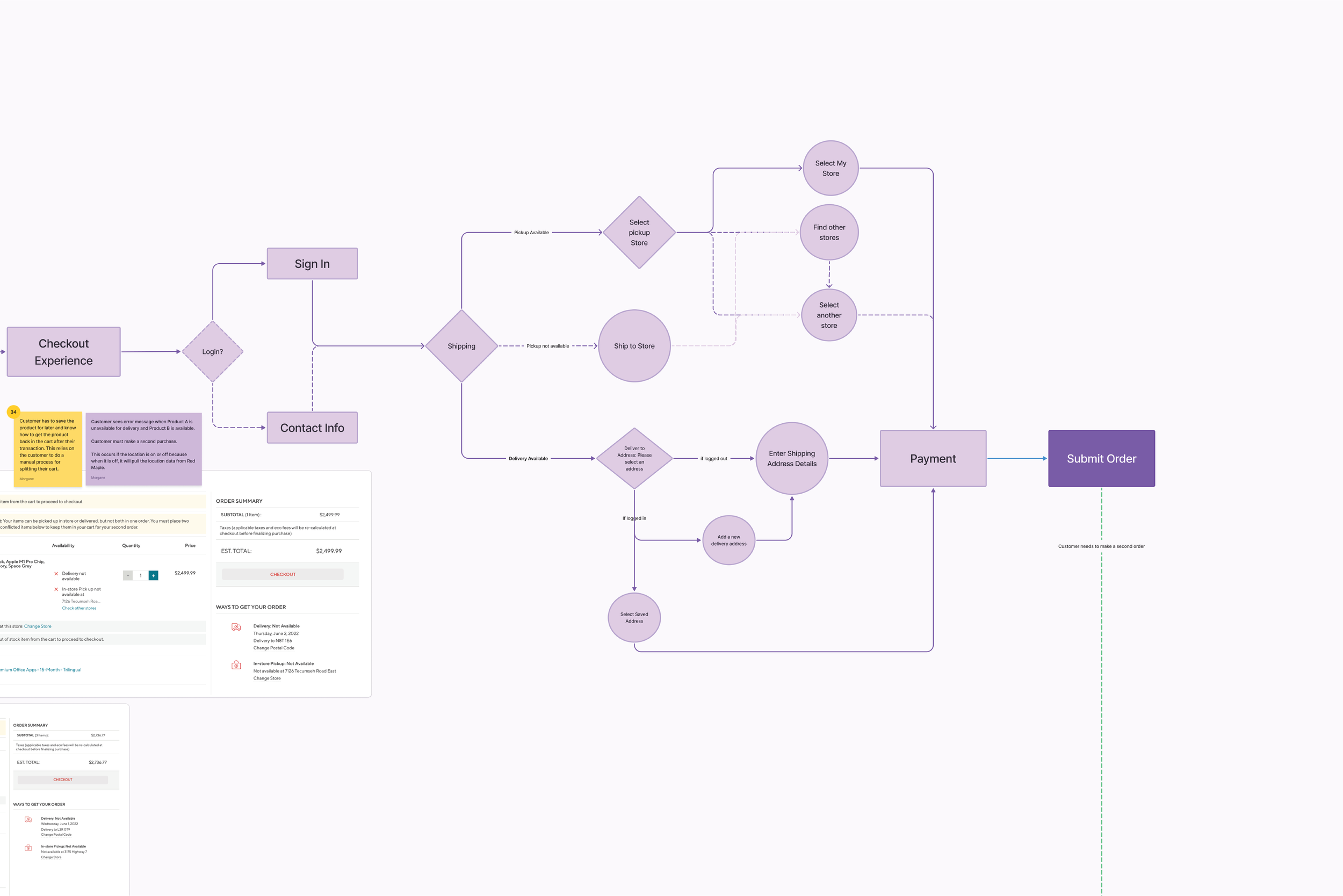
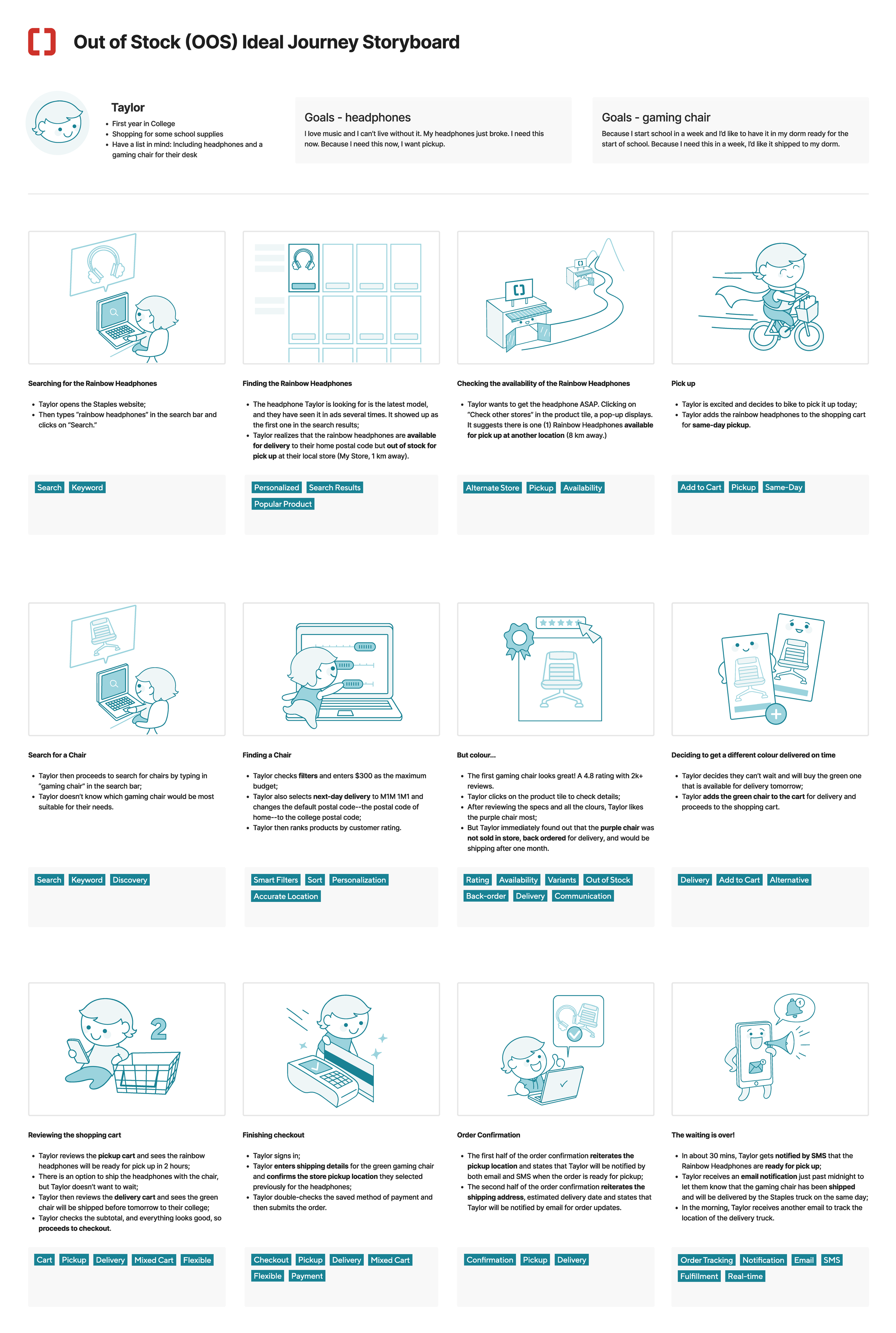
Poor short-term decisions that were not user-centred and made in isolation led to a tangled web of limitations across the website. You couldn’t resolve one problem without addressing the others. We needed to get this prioritized and on the roadmap, so we conducted a competitor analysis, created a storyboard of the ideal experience, illustrated the user pain points in various flow charts, partnered with the product managers, and pitched a presentation to the senior leadership team. The presentation caught wind and many of the noted issues made it to the product roadmap in the form of one project or another; the largest being a checkout refactor and eventually redesign.
Flow charts of the delivery, pickup and mixed cart user journeys.
Key Learnings
Get to know your users
Don’t make assumptions or inferences about what people want, but actually spend time with users to get to know what they want. This is done through observational research.
Outcomes over outputs
Outputs have no inherent definition of quality. Shift the definition of done to evaluate whether a feature will improve someone’s life and how? Focusing on the UX outcome we want to achieve will keep goals user-centred and bring value to the business.
Defer now, pay for it later
Delaying the inevitable only leads to increased development costs and waste. You can’t build a stable structure on fractured foundation.
Research driven roadmaps
Switch feature-driven roadmaps to research-driven ones by focusing on the UX outcomes and problems to be solved. Anything that hasn’t been researched or fully understood prior should not be on the roadmap.
We will never succeed at delivering a better user experience without better UX research.
In a low UX mature environment, designers are always being pressured to cut research short or omit it altogether because it takes too long. So stakeholders and product managers just use what they think they know, and presume the needs of users. Not only is this costly to the organization, but creates a lot of technical debt. Developers have to redo things over and over because of quick fixes, or they spend time and money building a feature that no one uses. Not to mention the lost sales and increased support costs that come with delivering a poor user experience.
To mitigate the costly risks of guessing, we need observational research. We need to spend time observing customers using our product in order to actually understand the problem and improve their lives. By investing in better research, we can prioritize the right things on the roadmap and build value-add features that delight users instead of frustrate them.